The Researcher-Practitioner Partnership
September 22, 2026A universal tenet of research is that effective collaboration with the organizations, institutions, or practitioners involved is critical to the process and outcome of the work being conducted. Shared goals and a strategy for capturing meaningful data are foundational to a productive partnership.
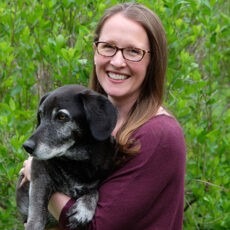
Dr. Megan Mueller is Associate Professor of Human-Animal Interaction at the Cummings School of Veterinary Medicine at Tufts University, where she also directs the Pets and Well-Being Lab and teaches in the Master of Science Animals and Public Policy program at the University’s Center for Animals and Public Policy. As a developmental scientist, she focuses on exploring the complex interactions between companion animals and their families, with a particular interest in adolescent development and well-being. Dr. Mueller currently serves on the Board of Directors for the International Society for Anthrozoology, as well as on the Pet Partners Human-Animal Bond Advisory Board. She is also President-elect of the Board of Directors for the International Society for Anthrozoology.
A recent conversation with Ross Institute Director Michael Kaufmann touched on key considerations in researcher-practitioner partnerships.
Michael Kaufmann: Over the last five years, you’ve been closely connected to Green Chimneys through University of Denver’s Institute for Human-Animal Connection research project. What are you working on at Tufts?
Megan Mueller: We are currently very interested in human-animal relationships, particularly how living with pets impacts youth development and family dynamics. Using a Positive Youth Development framework is a very promising way to study the impact of animals on kids. One of the reasons I love the PYD model is that it focuses on thriving and well-being, and focuses on the whole system that a child (and/or animal) lives in. Youth have an incredible capacity for change and growth, and the PYD model captures how youth can be successful, active participants in their own health and well-being. This also translates to the animal component of the relationships – how we can foster mutually beneficial relationships that are positive for both the human and the animal.
The PYD model was central to the project at Green Chimneys as a measurement tool. Individual relationships between children and animals require unique approaches rather than a one-size-fits-all method. Researchers have to be flexible and the research design has to respect existing programs. We were able to make that work at Green Chimneys.
MK: There often seems to be a gap between researchers and practitioners in animal-assisted services (AAS). How can we bridge that?
MM: Both first need to connect. As researchers, I think it’s important for us to develop relationships in our own communities with animal-assisted service providers. We should be reaching outside the walls of our institutions and getting to know the providers in the area, being curious about what they are doing and what their goals are. Developing these relationships can lead to mutually beneficial research partnerships that are built on trust. AAS providers can also reach out to researchers in their local area. There are also organizations that help bring researchers and practitioners together in both physical and remote spaces, such as the American Psychological Association HAI section; the International Association of Human-Animal Interaction Organizations (IAHAIO); and the Association of Animal-Assisted Intervention Professionals (AAAIP).
Mutual respect between researchers and practitioners is key in a good partnership, as well as clear communication about the proposed project. Conducting research in animal-assisted service settings can be challenging. Difficulties in standardizing interventions and focusing on underlying processes, rather than specific interventions, can challenge both the program providers and the researcher.
MK: Green Chimneys is an active residential treatment center and day school so research often seems complicated. We do have access to a lot of student feedback, satisfaction surveys, observation of impact…but that is not really research.
MM: There is real value to gathering feedback from end users, particularly students. It is possible to evaluate a program’s effectiveness by collecting that information. Practitioners often have access to these simple ways to gather valuable information. Talking to researchers can help practitioners discover that gathering some data does not need to be complicated or take huge amounts of time and bandwidth.
MK: In terms of human-animal interaction in general, and specifically animal-assisted services, what are some of the most pressing issues that you are following?
MM: One of the areas I’m seeing a lot of discourse in is the idea of how we assess and promote animal choice and agency within AAS. This issue has both a research component – how do we measure/evaluate choice, agency, and animal well-being – as well as a practical one, how do we develop practices to support animal well-being. In human-animal interaction, one of the topics I’m very interested in is individual differences in human-animal relationships and how we can take a “personalized” approach to understanding how to enhance these relationships. The research increasingly demonstrates that human-animal relationships are not the same for everyone, and our research needs to be sensitive enough to evaluate these differences.
This content appeared in Institute Insights, the official newsletter of The Sam and Myra Ross Institute at Green Chimneys. The Ross Institute serves as a model and training site for the varied facets of human-animal and nature-based interactions, grounded in evidence-based practices for implementing diverse and ethically responsible educational and therapeutic interventions and activities.
Join the discussion and subscribe to Institute Insights >