
Meet the Animals
Scroll, click and get familiar with some of the 300+ animals that enrich the Green Chimneys School experience for children with special needs. Through therapeutic education and residential treatment program, Green Chimneys students interact with animals in a variety of ways.
Want to support our work? Looking for a unique gift?
Sponsor an Animal today
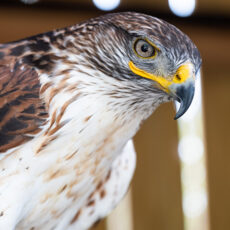
Ferruginous Hawk
This female Ferruginous hawk came to Green Chimneys from a falconer in Long Island, NY upon retirement from the sport of falconry, and will live out her life under Green Chimneys care. Beautiful feather decoration on its legs, a snow-white chest, and a very distinct call make this breed hard to miss. As the largest hawk in North America, it is sometimes confused with the Golden Eagle. This unique bird can hunt using several techniques: flying low to the ground at high speeds; soaring high above; or hovering and then swooping down to catch prey.
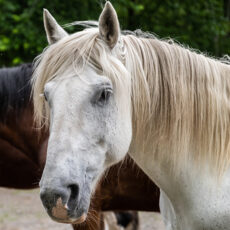
Albus
Adjusting to new surroundings can be a challenge...even for an animal! Albus arrived at Green Chimneys with some obstacles to overcome; he had never seen a camel, and he had to adapt to a busy campus with a diverse body of students. The staff and students promptly embraced the handsome Spotted Draft cross gelding, patiently introducing him to the variety of animals and taking him for long walks accompanied by other members of the horse herd. Albus easily learned that Green Chimneys is a fun place to live, and was soon ready to join the therapeutic riding program.
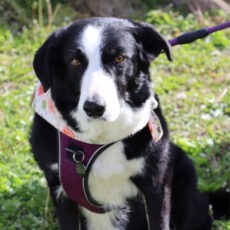
Heidi
In 2026, Heidi was voted as the Inaugural Animal of the Year. Heidi is a 7-year-old Border collie mix who comes to Boni-Bel Farm as part of the Green Chimneys' Campus Dog Program. She's calm and friendly with students and she helps heard the egg-laying chicken into their coop at the end of each day.
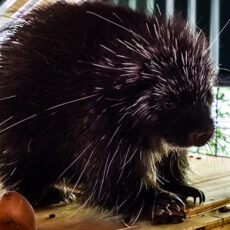
Porcupine
This porcupine is a first for the Green Chimneys Wildlife Center! Found in Upstate New York by a dog who brought the “porcupette” to its owner, the rescued baby received medical treatment and care from a local rehabber. When the baby was old enough to be on its own, it was determined to be too friendly to survive in the wild and was brought to Green Chimneys. This sociable creature became an instant hit among students and staff who love watching him enjoy his favorite foods—corn on the cob and sweet potatoes—and lounge on his high platform on warm days.
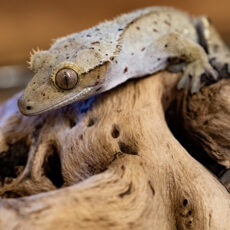
Rocket
Rocket has been a student favorite ever since his arrival at the Clearpool Nature Room. Crested geckos are native to the island of New Caledonia, near Australia, and were thought to be extinct until their rediscovery in the mid 90s. Claws help the gecko climb rough terrain, and tiny hairs on its toes and tip of its tail allow it to climb even the smoothest surfaces, including glass. Rocket’s ability to climb, jump, and change color from beige to yellow to orange make him exciting for students to handle, and they especially love trying to find where he is hiding in his tank.
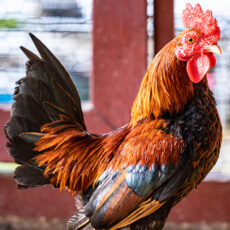
Hei Hei
Bantam rooster Hei Hei has become one of the most skilled animals at the farm, thanks to clicker training, a positive reinforcement approach utilizing a device that makes a distinctive “click-click!” sound, followed by a treat. Chickens have excellent memory and a surprisingly sophisticated communication system, making them highly trainable. Students participating in Hei Hei’s training benefit from a fun way to connect while developing communication skills, and working together to master timing between cue, clicker, and treat.
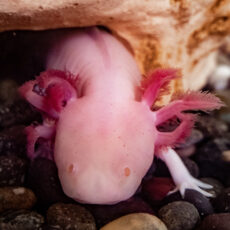
Axolotl
Recently made famous by a popular video game, the axolotl is known for its unique appearance and as an ambassador for environmental awareness. This cold water, cave-dwelling amphibian lives entirely underwater in lakes and canals in Mexico, and has been declared an endangered species due to pollution and urbanization. Green Chimneys students have the opportunity to observe this rare animal up close in the wildlife classroom, as wildlife staff teach about the importance of protecting our environment.
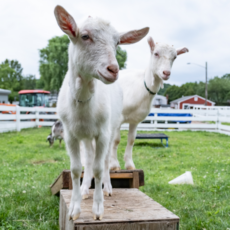
Ghost & Winter
These Saanen goats came from a local farm as eight-week-old kids and instantly became a top attraction at the farm. Green Chimneys students helped to bottle feed and acclimate them to their new home, at their own pace. A case of frostbite caused Ghost to lose the tips of his ears soon after birth, and Winter was born partially deaf. Despite these traits, both goats confidently make themselves known to all who pass. Ghost demands to be petted and insists that anything you may be holding belongs to him, while Winter has a more docile style, sneaking up on you to chew on your jacket or keys.
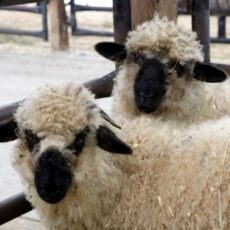
Mattie and Monti the Sheep
These outgoing sheep sisters were generously donated by one of our veterinarians from her personal flock. Often dubbed “the world's cutest sheep,” Valais Blacknose originated in Switzerland's Alpine region. In fact, these girls’ full names are Matterhorn and Monterosa, two famous Swiss peaks. This hardy mountain sheep is known for its distinctive coloring. Remarkably, the breed nearly vanished in the 1980s before conservation efforts saved them.
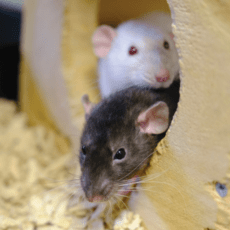
Flora, Fauna & Merryweather
These Fancy rat triplets born on Christmas Day came from a breeder in Upstate New York and were named by Green Chimneys students after the famous Sleeping Beauty fairies. While each has a distinct personality, they share favorite pastimes: eating and exploring! Students love to observe the rats’ behaviors and design interactive structures for them to climb. Flora tries her best to gather all of the food first, Fauna loves to climb to the very top of everything, and Merryweather is always the first to take a break and nap. These highly engaged sisters are helping to break the stigma around rats, showing that they are quite adorable!
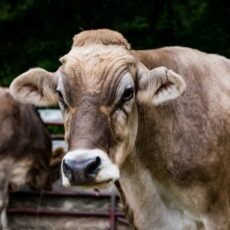
Benji
Green Chimneys has always been home to Benji, a creamy-colored Brown Swiss who arrived in 2016 as a one-week-old calf. Since then he has grown to an impressive size and is the largest of our cattle herd but his calm, quiet demeanor makes him easily approachable, giving Green Chimneys students many opportunities to interact with and learn from him. Benji loves to be groomed and taken for walks, and is very cooperative during handling, which helps when the hoof trimmer visits because Benji no longer fits the stanchion to keep him steady as the trimmer works away!
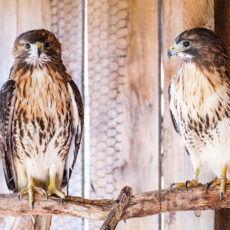
Red-tailed Hawks
This male and female pair of red-tailed hawks lived at New York’s Pace University for many years before joining the Paul C. Kupchok Wildlife Center. Both birds are rescues and unable to be released. The female is missing a few of her talons, which were burned off after landing on a telephone wire. The male has a permanent wing injury. Both have enjoyed otherwise healthy lives, and the female had even laid eggs right in her cage at Pace!
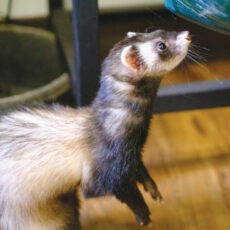
Pepper
This playful ferret has found a forever home in the Nature Room at our Clearpool Campus. Abandoned at a pet store at just 10 months old, Pepper’s health condition indicated that the original owner might not have known how much activity ferrets require. Pepper adjusted to her new surroundings almost immediately as Clearpool students made it their mission to give her daily exercise, helping her to achieve a healthy weight. She lives in a spacious cage next to senior ferret, Minka, and while her playful nature and high energy make Pepper great fun in the classroom, she quickly learned to play gently with her neighbor and they have become true friends!
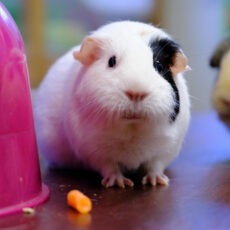
Calamity
Small animals in our farm classroom offer opportunities for Green Chimneys students to have close proximity as they study animal habits and learn about their care. Guinea pigs may be small but they are a big responsibility; enrichment and “choice” to participate is an important part of their daily routine. Calamity and her guinea pig group have been taught to scurry through a tunnel from their habitat directly onto the classroom table, where students can easily observe and interact with the friendly animals in a way that feels safe and comfortable. When the guinea pigs need a break, they simply tunnel back to their enclosure to rest.
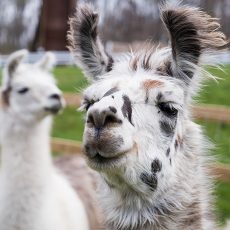
Lance
Lance is one of three llamas that joined the barn in 2019. He quickly gained the reputation of being the biggest thinker; he will not do anything unless he has had the chance to think about it first. When Lance first arrived at Green Chimneys, he developed a connection with a farm intern who guided him through clicker and pack training. Over time, Lance became more confident and willing. Today, he is a great example for students who struggle with activities that are new or unfamiliar, reminding them that they will eventually find their way.
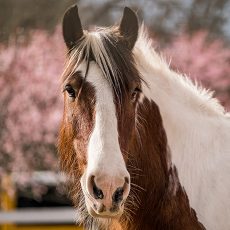
Noah
Noah, a Gypsy Drum horse, was discovered when Green Chimneys’ equine instructors were looking to add another large draft horse to our herd to give older students more opportunities to ride. Noah’s stocky build and shorter stature make for a steady, non-intimidating ride. He prefers to walk calmly and slowly, both of which comfort our students while they ride him, particularly if they are a little nervous. Noah’s blend of color, distinct markings, and long hair make him easy for students to identify and remember, helping them to gain familiarity and maintain a connection.
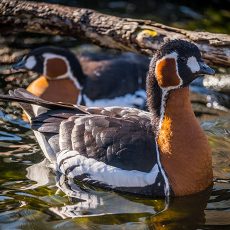
Red-breasted Geese
Donated by the Ripley Waterfowl Conservancy in Litchfield, Connecticut, this striking pair adds a new dash of color to the pond at the Wildlife Center. Red-breasted geese are smaller, stockier birds native to Europe and some areas of Siberia. They typically nest near peregrine falcons and gulls, using their neighbors as a deterrent from small predators that might attack a nest. These geese have a unique and piercing “ki-ioik, ki-ik” call that is easy to distinguish among the waterfowl chatter, and students can quickly recognize the geese by hearing them before spotting them in their habitat.
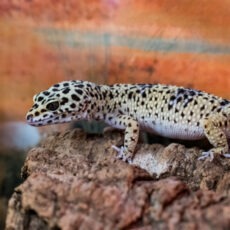
Leopard gecko
Like many of the animals in our wildlife classroom, our female leopard geckos were once pets who were in need of a new home. The geckos are popular with Green Chimneys students because they are able to hold them and closely observe their behavior. Handling smaller species also helps students learn how to be gentle with animals. A distinctive feature of the leopard gecko is the tail; it’s where they store their fat and you can tell how healthy they are by its thickness. In the wild, the tail serves as a defense from a predator’s grasp, falling off the gecko’s body for a quick escape and regenerating a new one in its place.
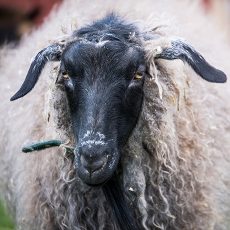
Johnny
Johnny came to Green Chimneys from a loving family when he was 3 years old. He is a Pygora goat, a cross between the Angora and Pygmy breeds, which are typically bred as show and fiber goats. When he has his full coat, Johnny is often mistaken for a sheep! Then, once he is sheared, his long ears get him confused for a dog. Johnny is extremely friendly and always looking for attention. He constantly tries to “supervise” the farm staff while they are carrying out their barn chores by standing right where they need to clean—just in case they miss a spot. Or Johnny might knock over a wheelbarrow so that they have to get everything extra clean.
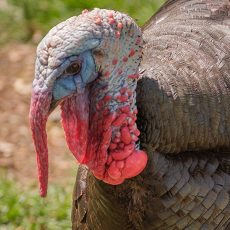
Wild Turkey
This wild/domestic hybrid turkey came to the Paul C. Kupchok Wildlife Center as a baby, and he has been right at home ever since. When the bird was tiny, students visiting him in the wildlife classroom loved watching the chick respond to whistling to come get a mealworm treat. As the turkey grew, he moved to his own outdoor habitat to live as he would in the wild. Native to the Hudson Valley region where Green Chimneys is located, wild turkeys are often seen along roadsides, mingling with deer.
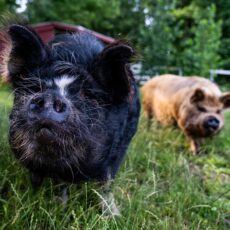
Georgia & Peaches
Georgia and Peaches are two of the biggest personalities on the farm. These Kunekune pigs are a notably smart pair and benefit from new enrichment every week; objects of interest, such as carpet samples, cones and basketballs are brought to their enclosure regularly. Kunekunes are a hardy breed that handle cold weather well so Georgia and Peaches live quite comfortably through the New York winter. In warm weather, one of their favorite activities is bobbing for apples in their pond!
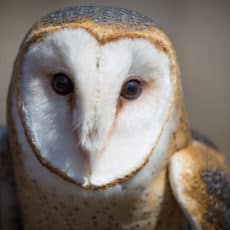
Barn Owl
The Barn owl (Tyto alba) is the most widely distributed species of owl and one of the most widespread of all birds. It is also referred to as the common barn owl, to distinguish it from other species in its family, Tytonidae, which forms one of the two main lineages of living owls. Tyto alba literally means "white owl". The barn owl is found almost everywhere in the world except polar and desert regions. In most regions, the barn owl is nocturnal, but in Britain and some Pacific islands, it also hunts by day. Barn owls specialize in hunting animals on the ground and nearly all of their food consists of small mammals which they locate by sound. They mate for life, which is rare in the animal kingdom.
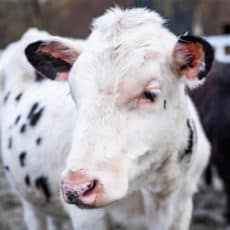
Blossom
Blossom, a Holstein cow, came to Green Chimneys as a young calf. She was born a freemartin, a common result of twin calves; the female twin absorbs genetic material from a male twin in utero, and after birth develops male traits and subsequently becomes sterile. Since Blossom can’t produce milk, the dairy farm where she was born asked Green Chimneys if we’d like to have her, and of course, we agreed! Blossom came to us around the same time as another calf named Alfie, and the two have grown up together while being cared for by staff and students alike. She also likes spending time with Fiona, pictured. Our Farm & Wildlife Center is home to several cows like Blossom, Alfie, and Fiona, and your sponsorship provides food, shelter, and care for all of them.
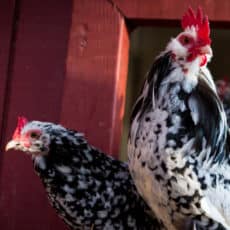
Bantam Chickens
Meet the Bantam chicken family: a hen that arrived at Green Chimneys with seven new baby chicks in tow. A local resident who keeps chickens discovered the eggs in the hen’s nest and realized that many chicks would need a bigger home. Once they hatched, she wanted to keep the family together and brought Mama and her chicks to the Green Chimneys Farm where they took up residence in the bunny hutch, living together happily with their rabbit roommates. The two roosters and five hens have grown up looking just like their black and white-speckled mom so there’s no mistaking this family resemblance!
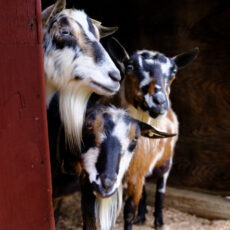
Christopher, Annie & Hazel
This Nigerian Dwarf goat trio received an enthusiastic welcome when they arrived from a therapeutic school similar to Green Chimneys in the summer of 2024. Having previous experience in educational and interactive programming certainly helped these goats acclimate quickly to our own farm and school setting, although it still took them some time to get used to new people, and animals. Watching them find their place in the herd and make new friends was a valuable reminder to students that everyone goes through that feeling of being the new kid.
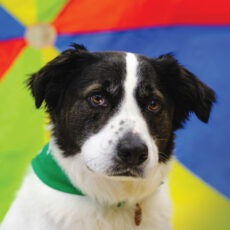
Porter
If you’re looking for a friend, Porter is one to seek. As a member of Green Chimneys’ campus dog program, this Border Collie mix is well recognized by his vivid black-and-white coat and a warmth and receptivity that makes everyone stop to greet him. Porter was two years old when he first joined the campus community, providing a calm presence for students in need of a break. He now spends several hours a week with the Occupational Therapy team, gently supporting students in their sessions. Porter loves walking through the farm and getting treats from staff across campus… he knows exactly which offices to visit for biscuits!
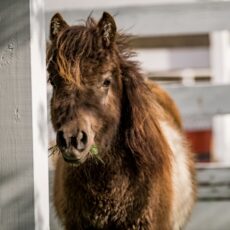
Cricket
Say hello to Cricket! Born May 15, 2019 to mama Maya, this mini horse foal was the apple of our eye before she even arrived. For students who may struggle with human relationships, communicating or regulating emotions, preparing for Cricket’s birth provided learning opportunities and life lessons. “Watching a new life begin and seeing the foal’s connection to its mother – these experiences are not only priceless, but they can also be therapeutic”, says Michael Kaufmann, Director of Green Chimneys Farm & Wildlife Director and Head of The Sam and Myra Ross Institute. With every new addition to our family comes additional responsibilities, and your gift ensures the continued safety and care of our animals.
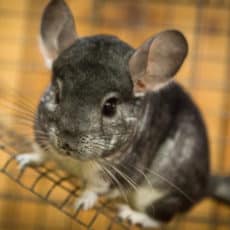
Chinchilla
The Green Chimneys wildlife classroom is home to an adorable pair of chinchilla brothers who are often the first animals students want to hold. The brothers are inquisitive and playful but also very shy so students must be calm, and allow the chinchillas to come to them. The students love to build tunnels and play areas for the chinchillas and watch them in their favorite activities: taking dust baths (an instinctive act to clean their fur) and eating raisins. Considered to be the softest animal in the world, the chinchilla is a rodent native to the Andes Mountains of South America, and is a relative of the porcupine and guinea pig.
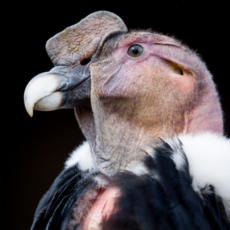
Andean Condor
In the late 1980s, during a significant decline in the wild California Condor population, this large South American Andean Condor was successfully bred in captivity at the Washington D.C. Zoo. This initiative was part of a research project aimed at developing effective methods for the eventual release of California Condors back into their natural habitat. Due to excessive imprinting on humans, this individual could not be released into the wild, leading the zoo to partner with Green Chimneys Wildlife Center to provide an appropriate sanctuary. Subsequently, the D.C. Zoo advanced its techniques for breeding condors in captivity, facilitating successful releases that contributed positively to the California Condor population. Notably, this condor is male, identifiable by the distinctive white collar around its neck, a characteristic exclusive to males.
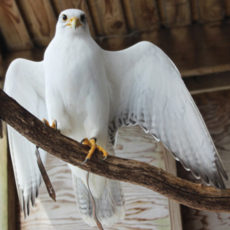
Gyrfalcon
Crowned the best for falconry in medieval times, gyrfalcons were once reserved for kings. As the largest falcon in the world, with exquisite plumage ranging from bright white to deep charcoal, gyrs are revered for their powerful skill of flight. Their long wings make hunting waterfowl from 3,000-feet-high a feasible and fantastical feat. This falcon was flown in the sport of falconry for several years. When he began suffering from seizures, he was retired to the Green Chimneys Wildlife Center to live out the remainder of his days. Here, he, along with nearly 50 other unreleasable birds, are under the care of expert wildlife staff and teach our children about wildlife, the environment and the importance of good care.
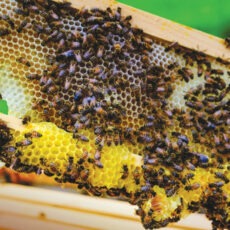
Carniolan Honey Bees
In April 2025, Green Chimneys horticulture staff began cultivating two active Carniolan beehives for students to have a unique educational opportunity, learning about beekeeping and harvesting apiary products, such as honey, beeswax, and bee pollen. Carniolan bees are a gentle and highly regarded subspecies well suited for educational settings due to their docile nature, reduced swarming tendency, and ability to adapt to cooler climates. Green Chimneys students worked hard to prepare the hives, and engage in a full range of beekeeping activities, from inspecting the hives to learning hive dynamics and seasonal care.
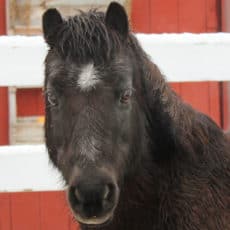
Dixie the Pony
Dixie is only 40 inches tall but she has a big heart! This 21-year-old Shetland pony is very popular with Green Chimneys students and staff. Her sweet and affectionate disposition is easy to see – she’ll come over to the fence just to say hello and get rubbed. Dixie loves playing with our miniature horses Ari and Dinky and enjoys doing pony rides for our smaller riders, especially the Nature’s Nursery preschoolers. And student get a big kick out of her morning ritual: as soon as Dixie finishes her breakfast (grain), she instantly rolls around on the ground with glee!
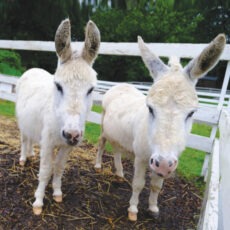
Russell & Francisco
This friendly miniature donkey pair came to Green Chimneys in spring of 2025 as a donation from Equine Rescue Resource. Outgoing Russell was a mature 18-year-old always ready for attention. Francisco was 8 years old and more reserved—he now enjoys a good scratch when students approach with patience and calm energy. Eye-catching white coats make them stand out in the paddock but it’s their instant engagement that draws in visitors as they greet all with their inquisitive nature. These two are virtual twins so students tell them apart by their noses: Russell’s soft pink, and Francisco’s darker gray.
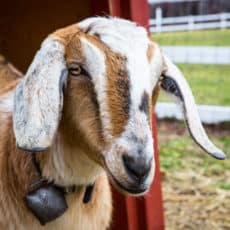
Nutmeg the Goat
A school that partners children with animals for educational and therapeutic activities is an ideal home for Nutmeg, a Nubian goat donated by a family who kept her as a therapy animal for a child with special needs. Nutmeg arrived at Green Chimneys as an energetic one-year-old. Although she had lived solely with people, she immediately adapted to her new goat peers at the farm. At the same time, she presents a challenge to students: goats possess a strong will so taking a walk is not always a simple task. In order to work with a goat like Nutmeg, the student has to develop the confidence, and the skill needed to gently show the goat the right direction to go.
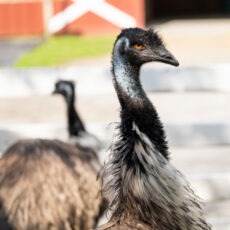
Emu
Green Chimneys often opens its stalls and paddocks to animals in need of a new home and this male and female emu pair was welcomed from another therapeutic school. A gradual introduction accommodated longtime resident emu Eli, who had not interacted with fellow emus for some time. The female became quite bonded to Eli and when she laid eggs, he was the one to sit on and incubate them, a typical role for male emus. Modeling ethical animal care for Green Chimneys students is a key goal of our program; to avoid overpopulation of emus in captivity and ensure their well being, eggs are removed so the birds can return to their daily routine.
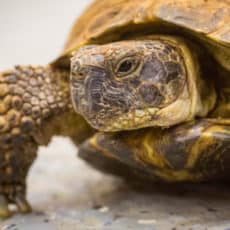
Russian Tortoise
There’s a reason this Russian Tortoise looks so iconic; it’s one of the most popular breeds sold in pet stores. This gentleman arrived at the Green Chimneys Wildlife Center as a rescue and secured a regular role in the classroom, helping students study the differences between tortoises and turtles; tortoises dwell on land, while turtles live in the water some or nearly all of the time. He has a reputation for being very active and outgoing and on warm, sunny days, the students take him outside to search for dandelion leaves to eat.
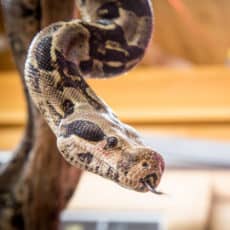
Red-tailed Boa
The red-tailed boa, also known as the boa constrictor, is native to the trees of South America — but this one hails from Long Island, New York! He was born and raised in captivity for three years until his owner decided to donate him to the Green Chimneys Wildlife program. In the boa's specialized enclosure, students can observe his movements and behaviors and even assist with feeding him rats.
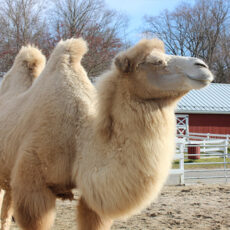
Phoenix
Bactrian camel Phoenix arrived in May of 2012 as a gift from the Sacred Camel Gardens in Northern California. Phoenix is a very self-assured but quiet and thoughtful camel, and an important partner in animal-assisted therapy sessions for Green Chimneys students. He has become a Goodwill Ambassador for Green Chimneys, helping to model our philosophy of involving children with animals and showing others that we care about all living beings. Camels aren’t trained in the same way as horses or dogs; Phoenix was raised to be motivated by engagement and curiosity, which makes him an excellent therapy partner for children who need help strengthening their social skills, confidence, and ability to stay focused.
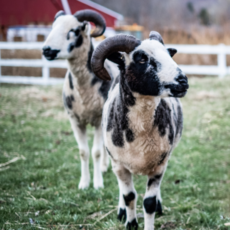
Zig & Zag
Meet Zig and Zag, the young ones of Green Chimneys’ Jacob sheep herd. Born three days apart to moms Ziggy and Rita, the boys have been raised side-by-side and are nearly inseparable. There are many rare breeds of farm animals that are no longer economical to keep in today’s modern agriculture, including the Jacob sheep. Traditionally kept on small farms in England, the Jacob sheep is in danger of becoming extinct. Green Chimneys is part of an international effort to preserve and breed these animals.