Awakening Instincts for Resident Turkey Vulture
January 13, 2026
Animal welfare is an important part of caretaking for each and every animal at our Farm & Wildlife Center. Animals that live in the wild naturally get a lot of animal enrichment. They spend time searching for food or shelter, and living among other species. It’s hard work but it’s highly stimulating. While birds in captivity have the ease of a steady food stream and constant shelter, these activities don’t engage or make use of their inherent skills.
The birds at Green Chimneys’ Wildlife Center cannot be safely released to their native habitat. Some have permanent injuries that would prevent their survival. Others became habituated to humans, or “imprinted,” and would struggle to survive independently. Adapting care tasks and devising activities to help these birds retain instinctive skills. Also, they enrich their day-to-day living, improving their well-being.
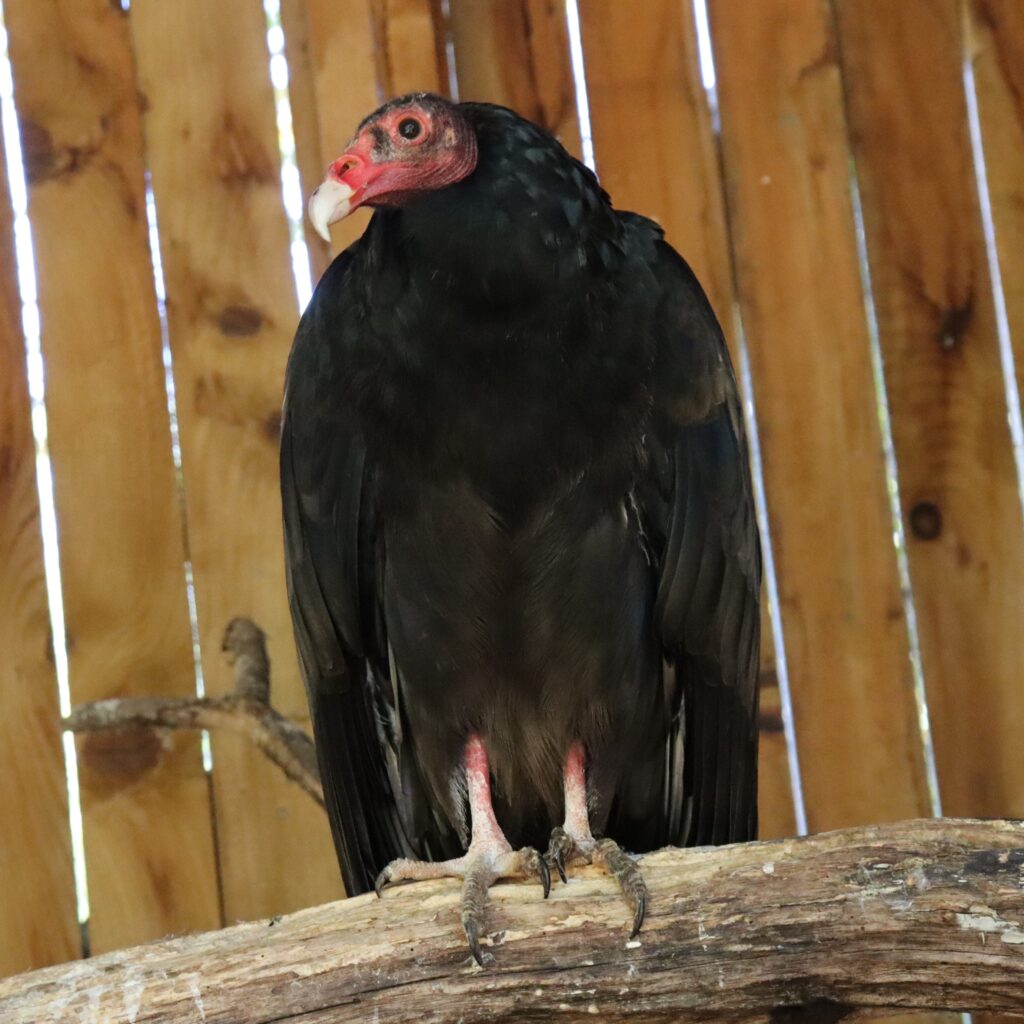
One Wildlife Center favorite is the turkey vulture. Found as a juvenile without parents to teach him necessary skills and behaviors, our vulture grew up more dependent than a bird in the wild. Vultures are not hunters. Vultures are Mother Nature’s garbage collectors and thrive on dead animals. It’s one of the few bird species with a sense of smell, which they use to search for carcasses on the ground.
Enriching Mealtimes
“We decided to give our vulture an enrichment opportunity that mimics what he would be doing in the wild,” explains Wildlife Manager Dave Spillo. “In the past, his food – typically chicks or a large rat – would be placed on the floor of his enclosure. Ready to eat, no need to find or capture it. Very easy but very boring. He needed a job!”
Longtime farm & wildlife volunteer Carrie Moskowitz devised a training plan. She set a goal to teach the vulture to search for his food in a large wood chip-filled tub. Accomplishing this plan required multiple steps. Like most animals, our vulture tends to be afraid of changes to its environment and fearful of new things, to the point of visible shaking. He first needed to learn that the tub wasn’t scary; that he could step into the tub and it would be safe to do that. He had to learn how to stick his beak into the chips, and that it would be safe to do that.
To get started, Carrie placed a tub of wood chips into the enclosure to give him time to adjust to this new object. After a week or so, staff began to place his food on top of the wood chips. The vulture was afraid to retrieve the food so it took a few weeks for him to climb into the tub.
Success!
“Once we saw him climb in to get his dinner, we knew we could make the experience more challenging. We began burying the food,” says Carrie. “This meant that our vulture really had to use his nose, beak, and feet to feed himself. He had to climb into the tub and sniff out the food. We’ve observed that he doesn’t like eating it in the tub. He’ll carry his food to another location in the enclosure to eat.”
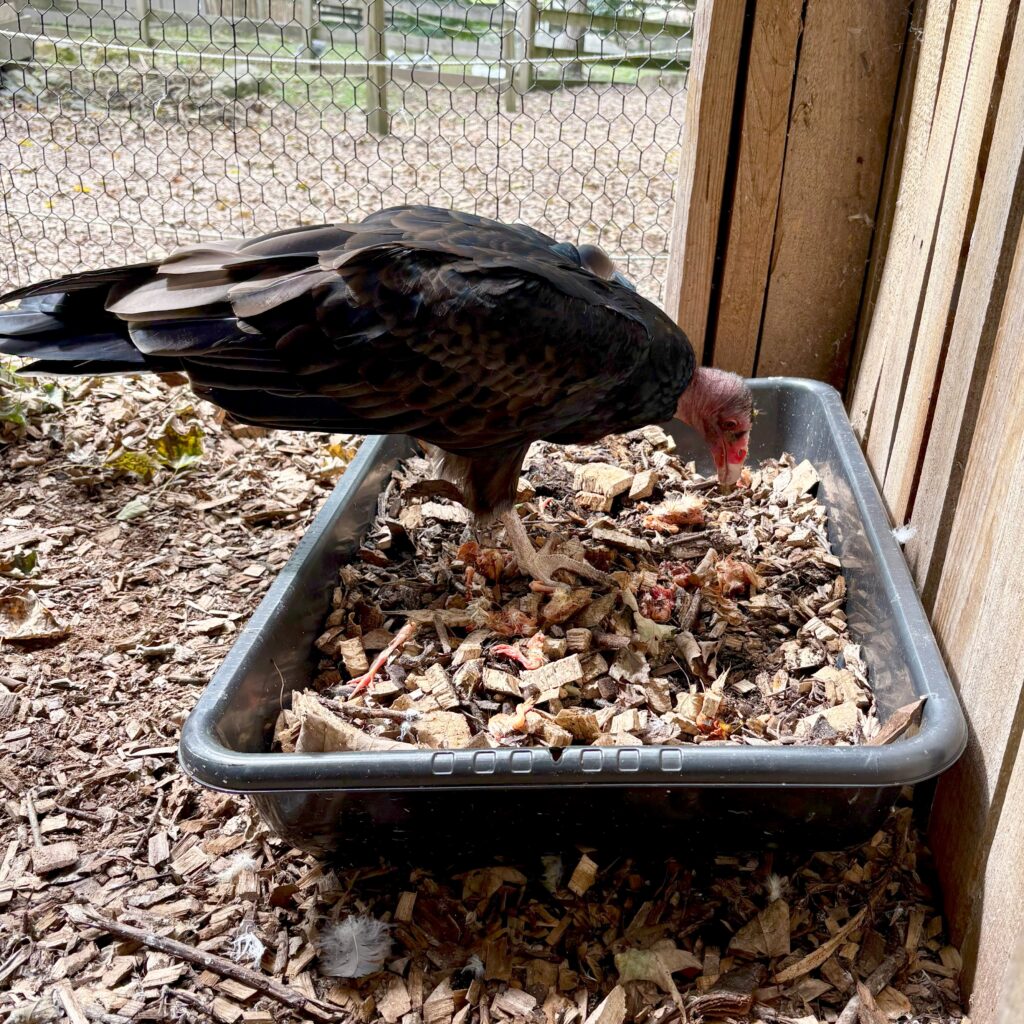
The vulture really enjoys the search for buried treasure. Now he hops right into the tub and starts poking around as soon as food is placed and spends a lot of time searching, just as he would in the wild.
In addition to enriching daily life for the vulture with other activities, like target training, sharing the valuable lessons of this activity help our students. They relate to the vulture’s experience as they learn to manage change and face new things, themselves.
See the turkey vulture and our many other animal species on Saturdays and Sundays, 10am-3pm. Plan your visit >