Cultivating a Restorative Mindset in Human-Animal Interactions
May 11, 2026By Kristin Licardi, LCSW, Green Chimneys Chief Clinical Officer
Human-animal interactions have long played an important role in education, therapy, agriculture, and community life. In youth-serving behavioral health settings in particular, animals can provide powerful opportunities for connection, emotional regulation, and learning. And the quality of those interactions matters. When we approach animals primarily through the lens of what they can do for us, we risk overlooking the relational nature of these encounters.
A restorative mindset offers a different approach — one that centers relationships, accountability, and mutual well-being. By applying principles from restorative practices to human-animal interactions, we can create environments where both people and animals experience greater safety, respect, and connection.
Restorative practices come from longstanding community traditions that emphasize relationships, accountability, and repair when harm occurs. Rather than focusing on rules or consequences, the emphasis is on proactive strategies to build positive connections first, so that we can be successful in repairing trust when something inevitably goes wrong.
At their core, restorative principles remind us that relationships matter — and that caring for relationships requires intention, empathy, and mutual respect. At Green Chimneys, this mindset is something we also extend to human-animal interaction. Instead of viewing animals primarily as tools for human benefit, we recognize them as partners in relationship.
Reciprocity and Mutual Care
A restorative approach encourages reciprocity and mutual care. The question becomes not only what animals can provide for humans, but also how humans can support the well-being of animals. Instead of control or dominance, we meet animals with love, care, kindness, and respect, and honor their needs without disregarding our own. This perspective acknowledges the interdependence between species and aligns with concepts such as One Health, and an ecojustice framework, which recognize the interconnected health of people, animals, and the environment.
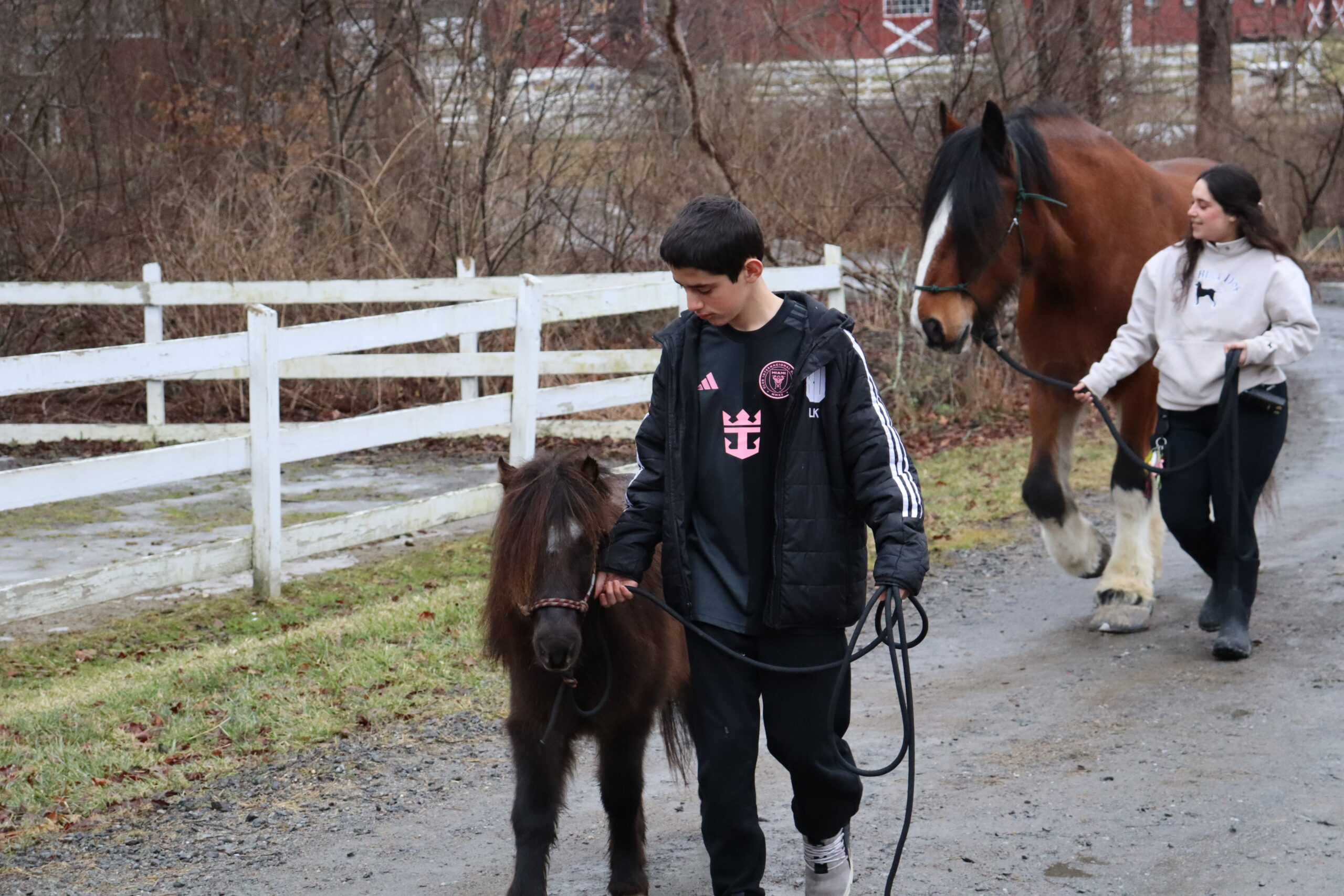
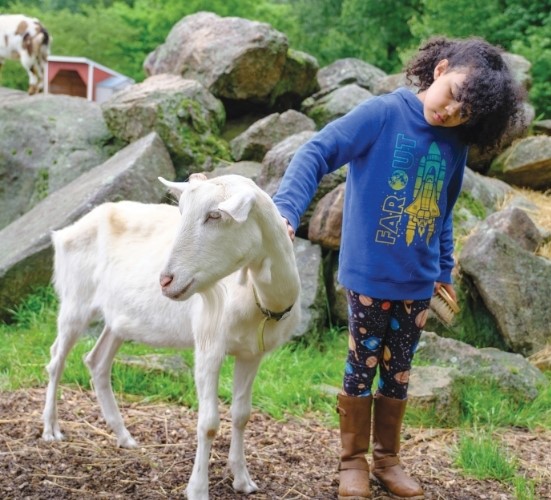
In restorative human-animal interactions, connection comes before activity. At Green Chimneys, instead of rushing into tasks or structured exercises, youth are encouraged to slow down, observe, and simply be present with the animals. That consistent presence helps to establish a sense of safety and trust. Walking the goats, sitting in the paddock with the sheep, or quietly watching wildlife can become powerful moments of connection.
Emotional Co-Regulation
Animals are incredibly sensitive to human emotions. When we approach an animal with anxiety or agitation, the animal often responds in kind. When we approach calmly, animals often mirror that calm.
Because of this, human-animal interactions provide a natural opportunity to practice emotional co-regulation. We can create conditions where emotional states of humans and animals influence one another in calming, supportive ways.
At Green Chimneys, our Social Emotional Learning curriculum is Dialectical Behavioral Therapy, which teaches four core skills: mindfulness; distress tolerance; emotion regulation; and interpersonal effectiveness. The STOP skill is one of the distress tolerance, or crisis survival skills, and is a common one we practice with youth in animal-assisted services because of how it naturally supports co-regulation. Our young people to learn to Stop, Take a step back, Observe, and Proceed mindfully. With this skill, they learn to pause, regulate their own breathing, move slowly, and observe both what is happening in their own body, as well as the animal’s response.
Matching pace and rhythm — such as brushing a horse with slow, intentional strokes or walking alongside a goat at a steady pace — can also help synchronize physiological states, and create a shared sense of calm and connection.
Animal Agency and Consent
One of the most important aspects of a restorative approach is recognizing animal agency. Animals cannot give consent the same way that humans do and they can communicate preferences, comfort levels, and boundaries through body language and behavior. A respectful interaction acknowledges these signals and allows animals the freedom to choose whether and how to engage.
At Green Chimneys, we increasingly offer choices to our animals which allows for more meaningful participation in the interactions with us. Practices such as ringing a bell to signal a “flock walk” with our chickens allows them to decide whether or not to join on the walk. With our guinea pigs, habitat features allow them to move into the “work space” when they want to interact, and stay out of it, or retreat, when they don’t. Dialogue grooming, where we offer our horses choice in what grooming tools they prefer and where on their body they prefer it, is another practice that helps reinforce consent and mutual respect. These approaches move away from dominance-based models and toward interactions rooted in trust and partnership, allowing for much more meaningful participation in the interactions.
Repairing Trust When Harm Occurs
Even in well-intentioned interactions, misunderstandings and mistakes can happen. A restorative mindset does not ignore these moments; instead, it treats them as opportunities for learning and repair.
The youth at Green Chimneys come to us with unique strengths and challenges. What they often have in common are deficits in emotion regulation and impulse control, which can lead to behaviors that put animals, and others, at risk of harm. That said, animal harm is extremely rare here. Last year, we had 16 incidents of an inappropriate animal interaction, with the large majority of those being accidental or threats made when dysregulated, and no actual harm.
Our foundational belief is that human-animal interaction facilitates healing, and improves emotion regulation and coping skills so it is important that we are able to continue to facilitate those interactions safely. Rather than punish or prohibit the youth from interacting with the animal, our goal is to reduce risk, address underlying skill deficits, and rebuild safety and connection.
Green Chimneys’ Animal Interaction Team is an interdisciplinary committee made up of animal experts and clinicians who review incidents, help assess the function of the inappropriate interactions and make recommendations to reduce risk, strengthen skills, and repair relationship. Repair may involve pausing the interaction, providing space for both human and animal to regulate, reflecting on what occurred and doing something to care for the animal. Depending on what occurred, we reintroduce contact slowly and with close supervision so that trust can be rebuilt naturally. In this way, we foster accountability and make sure the human-animal interaction can continue safely.
Benefits of a Restorative Approach
Adopting a restorative mindset in human-animal interaction offers significant benefits. For humans, these experiences can support improved mental health, emotional regulation, empathy, and social connection. For animals, respectful interactions promote better welfare, reduced stress, and increased opportunities for enrichment. Together, these experiences also nurture a broader sense of environmental stewardship, helping young people understand that they are part of a larger community of living beings.
Navigating the Tension in Human-Animal Relationships
Many people notice a contradiction in human relationships with animals. We form deep bonds with some animals while others are raised for food, used in research, or kept in settings that may not prioritize their wellbeing. At Green Chimneys, we treat our pigs and chickens as loved companion animals, yet our dining hall serves meat. That tension is real, and it reflects the complexity of our cultural, economic, and historical relationships with animals. A restorative mindset does not ignore this tension. Instead, it invites us to acknowledge the complexity, and help people develop empathy, awareness, and responsibility so that future decisions — whether personal, professional, or societal — are more thoughtful and humane.
Our goal isn’t to claim that the world already treats animals in fully relational ways, nor that it should in every context. Instead, our work tries to model what respectful, attentive, and more humane relationships with animals can look like, especially in animal-assisted services with young people who are still forming their values and developing ways of relating to the world.
Training Ourselves to Listen
Perhaps most importantly, restorative practices encourage people to truly listen — to animals, to one another, and to the natural world. As author A. A. Milne, creator of Winnie-the-Pooh, famously wrote, “Some people talk to animals. Not many listen though. That’s the problem.”
Humans often misinterpret animal emotions and intentions by relying on situational context, prior knowledge or our own projected feelings, rather than on the animal’s actual behavior. When we get it wrong, it can lead us to respond to the animal inappropriately or even unsafely. If we do this consistently, the animal learns that we are unreliable, leading to chronic stress, fear, and a breakdown in our bond.
Instead, we need to be more humble in our understanding of animals. We must continue to learn about animal behavior and recognize that each animal has its own unique personality and emotional expression, and pay close attention to body language and any behavioral cues. We can train ourselves to move from subjective assumptions to objective observation, set aside our human-centric views and learn to observe what is really there. Misattunement, at times, is inevitable. A restorative mindset helps us respond to these moments with curiosity rather than blame. Connection is not about getting it right every time; it’s about noticing when we get it wrong, updating our assumptions, and repairing the relationship.
At Green Chimneys, we strive to teach young people how to listen, really listen, to animals, to nature, and to one another. When youth experience relationships built on trust, respect and care, something powerful happens. They begin to see themselves differently. They discover that they can nurture connection, take responsibility, and contribute positively to the world around them.
And sometimes, the lessons that begin with animals extend far beyond the barnyard; helping young people build stronger, healthier relationships throughout their lives and modeling a way of being that restores connection, dignity, and balance for all living beings.
This content appeared in Institute Insights, the official newsletter of The Sam and Myra Ross Institute at Green Chimneys. The Ross Institute serves as a model and training site for the varied facets of human-animal and nature-based interactions, grounded in evidence-based practices for implementing diverse and ethically responsible educational and therapeutic interventions and activities.
Join the discussion and subscribe to Institute Insights >