Announcements

The care and well-being of animals is foundational to Green Chimneys’ beliefs and practices in animal-assisted activities and interventions. Our animals are valued partners. While the human benefit of the interactions in our programming is always the primary focus, practitioners across professions agree that the animal must be an active and willing participant.
It is a fact that humans control the lives of domestic animals, and animals cannot give consent in the way humans do. Animal well-being is a priority when any animal – dog, horse, goat or guinea pig – is participating in an animal-assisted service. However, giving options to animals in education or therapy programs – including the chance to opt out of an activity that does not suit them – is also possible.
At Green Chimneys, we increasingly offer choices to our animals which allows for a greater opportunity for meaningful participation from them. As their caretakers and partners in therapeutic work, we try to remember that our animal partners will not always be receptive and ready for work. Just as a person can have an ‘off’ day, animals have similar experiences. We consider invisible variables that may be at play: a goat can have an upset stomach; a strong perfume may be repelling to a rat; a horse can just be sleepy. Some variables are more apparent, such as a woolly sheep panting on a hot day or an alpaca’s erratic behavior during a noisy special event. Internal and external conditions can affect how an animal feels about participating in activities. Offering choices gives the animal care team greater insight into individual personalities, and creates a respectful working relationship.
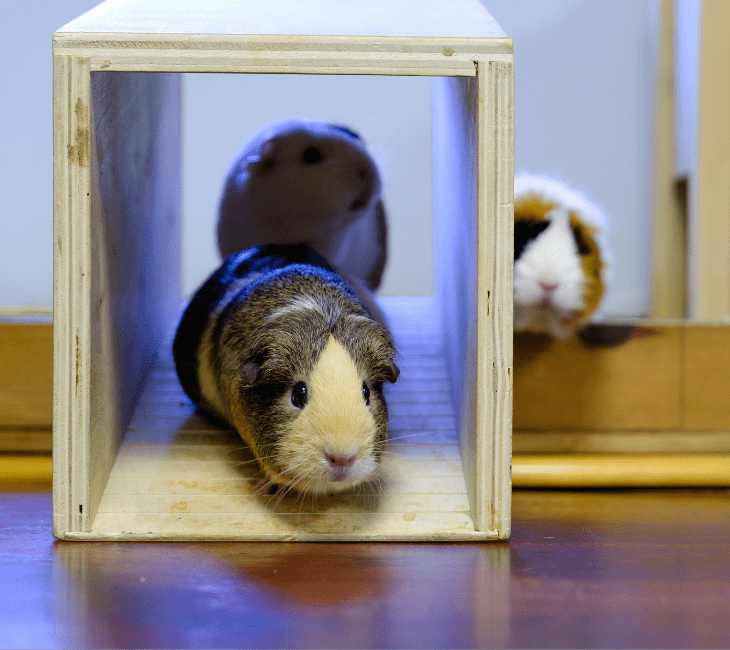
Our goal is to integrate choice into everyday activities with our animal partners. For small mammals, such as guinea pigs and rabbits, habitat features allow them to join interactions, or leave them, at will.
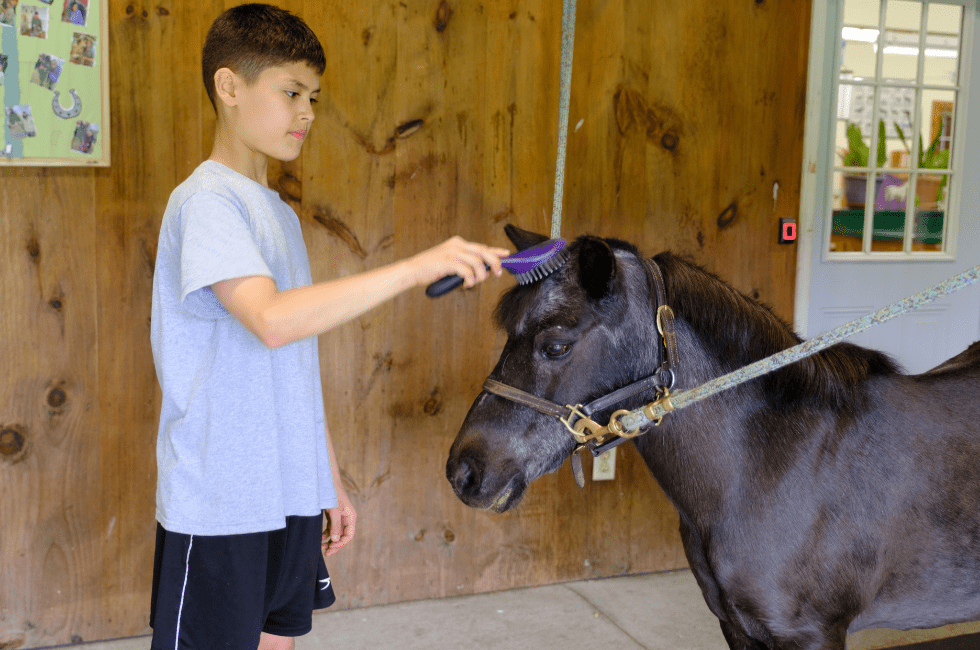
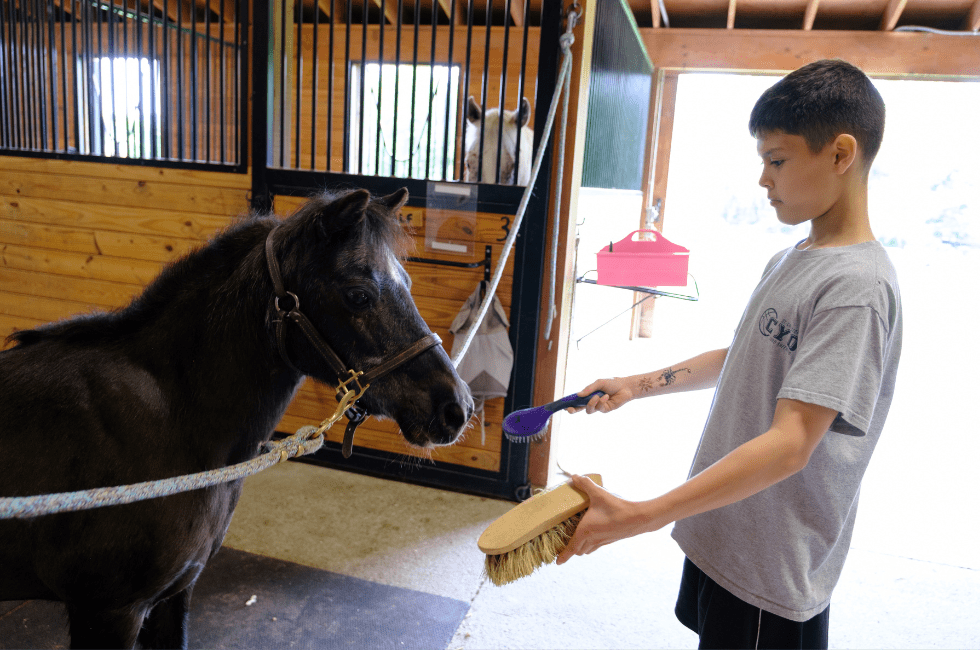
In equine care, grooming horses for maintenance is typically a “one-way conversation” as a task that is done to the horse. Our horse barn has adopted Dialogue Grooming, which gives students the opportunity to conduct the task based on cues or responses from the horse.
In the farm classroom, guinea pigs cross a ramp from their habitat directly onto the table where students can observe and engage with them, and return to their tank when they like. If the classroom rats don’t come to their door at interaction times, the lesson continues without their participation. Since increasing our focus on giving our animals a choice, we noticed a significant decline in nervous behaviors and an increase in sociability with people.
Here, the student selects two grooming tools at random and presents them to the horse; the horse responds by nuzzling or nudging its preferred tool. The student honors the horse’s choice and proceeds to use the specified grooming tool. Often, students find a challenge in figuring out a horse’s favorite spots, which can be identified by observing the horse’s reactions, such as leaning into the pressure, tilting their head, lifting their lips, or even falling asleep!
A new choice-based activity involves our chicken flock. The chickens are very popular and get a steady stream of visitors throughout the day, which can mean numerous hands seeking to pet or pick them up. Finding a new way for students to interact without holding the birds was an important adaptation that brought Flock Walks!
Farm staff taught the chickens to respond to the ding of a bell, signifying it’s time to walk. Several times a week, the chickens leave the coop to walk around the farm. They explore while the humans watch for predators. When it’s time to continue walking, the bell dings and the flock resumes! Any birds not in the mood to join simply stay behind in the coop.
These lessons in respectful interaction through animal choice translate well to students as they build interpersonal skills, and learn to express their own needs in effective ways.